
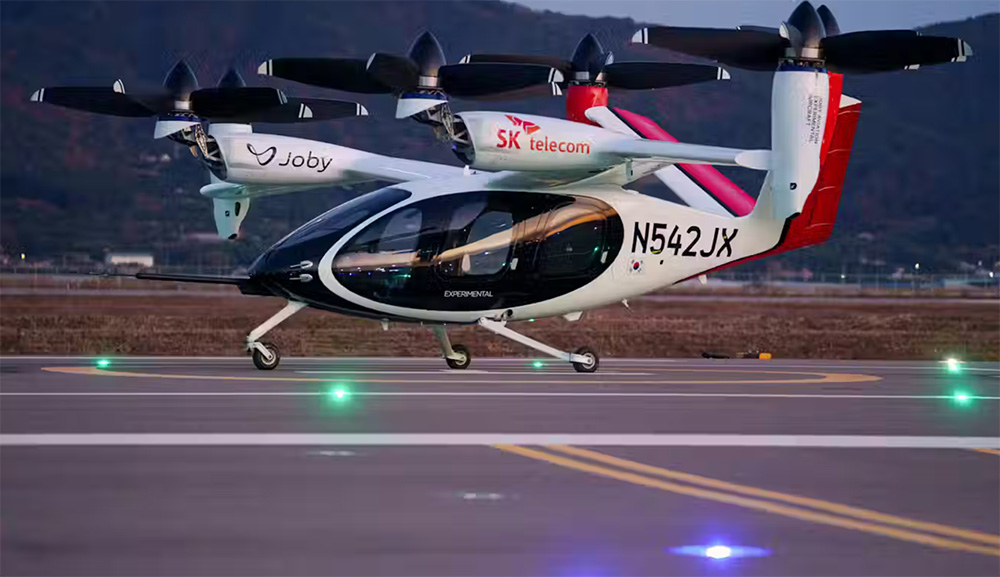
Here’s a current, big-picture look at the state of eVTOLs (electric vertical takeoff and landing aircraft) — as we enter 2026: from certification and regulatory hurdles, to real-world pilots, early commercial rollouts, and the hurdles still standing between sci-fi promise and everyday reality.
eVTOL aircraft — electric (or hybrid) are being designed to serve short urban or regional trips — shrinking commutes and airport connections from hours to minutes.
Regulatory & Certification Landscape
2025–2026 is a pivotal certification year.
In the United States, regulators like the Federal Aviation Administration (FAA) have created new rules for “powered-lift” aircraft, including airworthiness and pilot standards. These are foundational steps toward commercial operations.
Companies such as Joby Aviation are in the final stages of FAA type certification for their S4 eVTOL and aim to begin commercial passenger service as early as 2026.
Cities and nations are rolling out test corridors and pilot programs designed to integrate eVTOLs safely with existing air traffic and urban infrastructure.
But not all plans are on track. For example, Arlington, Texas, had hoped to deploy air taxis for the 2026 World Cup, only to delay because of regulatory slowdowns and supplier issues.
Real-World Trials & Early Operations
2026 is shaping up as the year of transition — from testing to initial commercial use.
United States
The Florida Department of Transportation has outlined ambitious plans for an air taxi network along the I-4 corridor — from Daytona Beach through Orlando to Sarasota — with the goal of introducing commercial services by the end of 2026.
In Texas, South Texas’ first vertiport (dedicated take-off/landing infrastructure) is advancing, with backing from aerospace firms and air-traffic autonomy systems.
Middle East & Asia
Vertical Aerospace is pushing forward with air taxi route planning in Japan and emergency medical eVTOL trials in Singapore, indicating growth beyond mere demonstrations.
The Delhi-NCR region in India is planning an air taxi corridor connecting key commuter nodes like Gurgaon, Noida, and central Delhi — starting first with medical transport to build confidence and safety data.
Early Commercial Services — Dubai Spotlight
Dubai is arguably at the front of the global queue for actual commercial flying taxi services:
The Roads and Transport Authority (RTA) has partnered with Joby Aviation to build vertiports (takeoff and landing hubs) at Dubai International Airport (DXB), Downtown Dubai, Dubai Marina, and Palm Jumeirah.
If infrastructure and certification timelines hold, limited service and demonstration flights are expected in 2026, with full commercial operations shortly after.
Proposed services could cut typical road journey times dramatically — for example, a DXB → Palm Jumeirah route (~45 minutes by car) might take ~10–12 minutes by air.
Market & Economic Outlook
The underlying urban air mobility market — which encompasses flying taxis, vertiport networks, and related technologies — continues to attract investment:
Some forecasts anticipate the market growing rapidly through the 2020s as regulators, manufacturers, and infrastructure coalesce around certification and early deployment.
Innovators are also exploring hybrid and autonomous systems, data integration (AI for air traffic), and broader traffic management to scale operations safely.
Challenges Still Ahead
Despite momentum, several major hurdles remain:
Certification & Safety
Full commercial certification — especially for autonomous operations — is still a work in progress. While procedural rules exist, safety data and scalable operations are ongoing trials.
Infrastructure
Building vertiports and urban take-off/landing zones requires heavy investment, community trust, and zoning adaptation in cities that have never hosted regular low-altitude passenger flights.
Cost & Accessibility
Early services may be expensive and niche, limiting widespread adoption in the immediate term. The technology’s costs before scale could restrict it to premium or specific corridors.
Where Things Stand Today — A Snapshot
2026: A landmark year where first commercial services are plausible in some markets (e.g., Dubai, portions of the U.S.) and broad pilot programs are underway worldwide.
2027–2030: Broader introduction as certification solidifies, infrastructure scales, and operational costs come down.
2030+: Widespread adoption in major cities becomes more realistic, especially if autonomous eVTOLs and traffic management systems mature.
Conclusion
Flying taxis are are entering the critical phase where regulators, manufacturers, and cities are trying to make them part of everyday transport. With real deployments expected in 2026 and global pilots in full swing, the dream of taking an air taxi in place of a traffic jam may soon be a reality — albeit initially in select regions and for niche use cases.
As certification, infrastructure, and economics evolve, 2026 may turn out to be the year the future of urban air mobility finally begins to take flight.